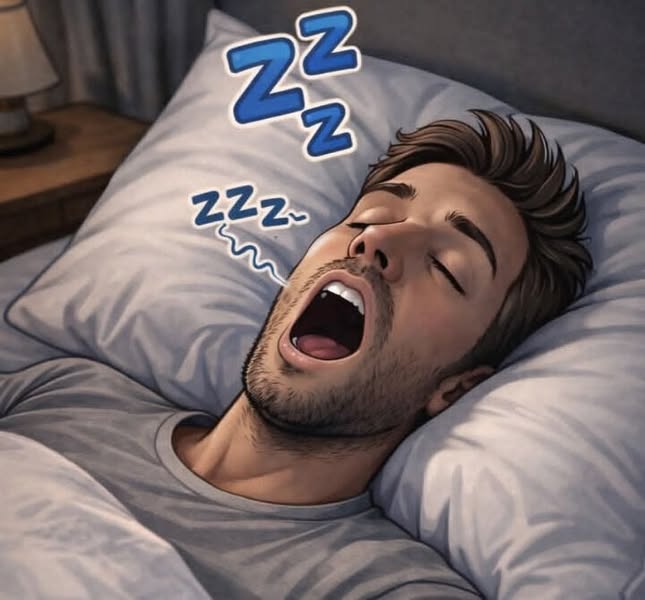
Did You Know That If You Snore While Sleeping, It’s a Symptom of Something More Serious?
Did you know that if you snore while sleeping, it’s a symptom of something that may go far beyond just “loud sleep”?
Many people think snoring is just a harmless annoyance or a funny quirk someone has at night. In reality, snoring can sometimes be a warning sign from your body that something isn’t working as smoothly as it should in your breathing system during sleep.
While occasional snoring can be normal, frequent and loud snoring may be linked to underlying sleep-related breathing disorders. One of the most important conditions associated with snoring is obstructive sleep apnea.
Snoring is the sound produced when airflow is partially blocked while sleeping. As air struggles to move through the nose and throat, tissues vibrate, creating that familiar snoring sound.
Sleeping position (especially lying on your back)
But when snoring becomes chronic and loud, it may indicate something more complex than just lifestyle factors.
One of the most common conditions linked to heavy snoring is Obstructive Sleep Apnea.
Sleep apnea is a disorder where breathing repeatedly stops and starts during sleep. These interruptions can last a few seconds to even a minute, and they may occur many times throughout the night.
Common signs that snoring may be related to sleep apnea:
Waking up feeling tired even after a full night’s rest
Unlike simple snoring, sleep apnea affects oxygen levels in the body and can disrupt deep, restorative sleep.
If snoring is connected to sleep apnea, it becomes more than just a nighttime noise issue—it becomes a health concern.
Untreated sleep apnea may increase the risk of:
Chronic fatigue and accidents due to drowsiness
Because the body repeatedly wakes up briefly to restore breathing, sleep quality is severely reduced, even if the person doesn’t remember waking up.
Not all snoring means sleep apnea. There are several other possible causes, including:
Blocked nasal passages from allergies, sinus infections, or a deviated septum can make breathing harder during sleep.
Alcohol, smoking, and certain medications can relax throat muscles too much, increasing snoring.
Sleeping on your back can cause the tongue and soft tissues to collapse backward, narrowing the airway.
Extra tissue around the neck or naturally narrow airways can contribute to airflow obstruction.
You should consider paying attention to snoring if:
Someone notices you stop breathing during sleep
If any of these apply, it’s a good idea to consult a healthcare professional or sleep specialist.
Depending on the cause, several strategies may help reduce or manage snoring:
Sleeping on your side instead of your back
In some cases, medical treatments or devices such as CPAP machines may be recommended, especially if sleep apnea is diagnosed.
So, did you know that if you snore while sleeping, it’s a symptom of something that might deserve closer attention?
While not all snoring is dangerous, it can sometimes be a signal that your breathing is partially obstructed during sleep. Understanding the difference between simple snoring and conditions like sleep apnea can make a big difference in long-term health and energy levels.
If snoring is frequent and affecting sleep quality, it’s always better to investigate it rather than ignore it.