Madonna Brings Family, Resilience, and Showmanship to the Stage in New York
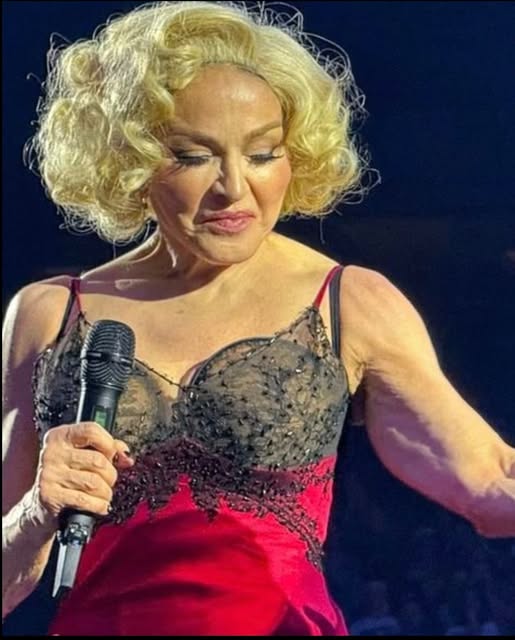
Madonna returned to one of New York City’s most famous venues with a performance that once again placed her at the center of public conversation. Appearing before a packed crowd at Madison Square Garden in Manhattan, the music icon combined theatrical stagecraft with deeply personal family moments in a concert that reflected both her long career and her enduring ability to command attention.
At 65, Madonna continues to hold a unique place in pop culture. Her latest appearance showed the same confidence and sense of identity that have shaped her public image for decades, while also revealing a more intimate side as she marked an important milestone for one of her children during the show.
A Night That Blended Spectacle With Personal Meaning
The concert carried more significance than a typical tour stop. It also served as a celebration of her daughter Chifundo “Mercy” James Kambewa Ciccone’s 18th birthday, giving the evening a family-centered atmosphere that stood alongside the large-scale production fans expected.
Madonna has long built performances around visual impact, movement, and emotional storytelling. At Madison Square Garden, that familiar approach remained intact, but the inclusion of her children gave several moments added warmth and sincerity.
The event underscored how her performances often move between public spectacle and personal reflection. That balance helped make the night feel both expansive in scale and close in emotional tone.
Mercy James Joins Madonna on Piano
One of the evening’s standout scenes came when Mercy James joined her mother onstage at the piano. Together, they performed “Bad Girl,” the 1992 song that became one of the concert’s most memorable moments.
The duet brought a multigenerational element to the performance and drew a strong response from the audience. Rather than functioning as a simple guest appearance, the moment felt like a visible expression of Madonna’s role as both performer and parent.
Mercy’s calm presence and musical contribution reflected the creative environment Madonna has encouraged within her family. In recent years, several of her children have appeared alongside her during live performances, and this latest appearance continued that pattern.
David Banda Adds Another Emotional Layer
The family focus did not end there. Madonna’s 18-year-old son David Banda Mwale Ciccone also joined her during the concert, appearing on guitar for “Mother and Father,” the 2003 track known for its emotional themes.
That performance added a different kind of weight to the show. The song’s connection to grief, identity, and endurance made the collaboration especially meaningful, and David’s role onstage highlighted his own growing musical ability.
For longtime fans, these appearances offered more than nostalgia or novelty. They provided a view into Madonna’s personal life through music, showing how motherhood, memory, and artistic expression continue to intersect in her work.
Online Reactions Turn to Debate
As with many Madonna appearances, the response extended well beyond the arena. Social media quickly filled with discussion about her stage presence, her appearance, and the broader meaning of how she presents herself in public.
Some critics questioned her style choices, while supporters praised her confidence, discipline, and refusal to accept narrow expectations tied to age. The reactions reflected not only public interest in Madonna herself, but also wider cultural debates around age, image, and gender in entertainment.
For many supporters, the conversation reinforced something Madonna has represented for much of her career: a challenge to the assumption that women in pop music must fade into the background as they grow older. That idea has shaped much of the discussion surrounding her for years, and this latest performance renewed it once again.

A Career Defined by Reinvention
Madonna’s ability to generate discussion is not a recent development. Since the 1980s, she has repeatedly changed her image, sound, and visual style while remaining one of the most recognizable performers in the world.
Her career has been built on reinvention, but also on control. Through music, fashion, stage design, and public appearances, she has continually shaped her own narrative instead of allowing others to define it for her.
That approach has often sparked controversy, but it has also helped sustain her relevance across decades of change in the music industry. Many artists remain linked to a single era. Madonna, by contrast, has repeatedly adjusted her work to new audiences and new cultural moments without losing her identity.
Her stage performances continue to be central to that legacy. The combination of choreography, storytelling, and visual design remains one of her strongest trademarks, and the Celebration Tour has leaned heavily into that strength.
The Celebration Tour Honors a Long Legacy
The Celebration Tour stands as Madonna’s 12th major concert tour and marks more than 40 years in music. It is structured as both a retrospective and a statement of continued relevance, bringing together major hits, lesser-known tracks, elaborate costumes, and large-scale visual design.
The scale of the tour reflects her lasting global appeal. It has reportedly grossed about $77.4 million across 79 dates, a figure that highlights how powerful her audience reach remains after decades in the public eye.
Her digital presence is also significant. With 44.6 million monthly listeners on Spotify, Madonna continues to draw substantial attention from listeners around the world, showing that her catalog still connects with both longtime fans and newer audiences.
The creative direction behind the tour has involved Lewis James and musical director Stuart Price. Together with Madonna, they have shaped a production designed to reflect the full range of her career while keeping the live experience dynamic and contemporary.
A Distinctive Choice for the Opening Act
Another notable aspect of the tour has been Madonna’s selection of Bob the Drag Queen, winner of RuPaul’s Drag Race Season 8, as the opening act. The choice reflects long-standing parts of Madonna’s public identity and artistic values.
Throughout her career, she has openly supported LGBTQ+ artists and communities. Her connection to drag culture and queer creative expression has been visible for years, making the choice of opener feel consistent with the broader themes that have shaped her work.
Rather than serving as a detached pre-show addition, the opening act contributes to the tone of the overall production. It helps position the tour as more than a hit-driven retrospective and instead as an extension of the cultural ideas Madonna has championed throughout her career.
Legal Attention Surrounds Tour Timing
Even as the tour has been celebrated by many fans, it has also drawn legal attention. On Friday, January 19, two fans, Michael Fellows and Jonathan Hadden, filed a federal civil lawsuit against Madonna in the Eastern District of New York.
The case accuses the singer of “false advertising” and seeks unspecified damages. The complaint focuses on her December 13 concert at Brooklyn’s Barclays Center, where the plaintiffs allege the show began much later than expected.
Madonna reportedly went onstage at about 10:45 p.m., with the delay linked to “sound check issues.” The plaintiffs argue that the late start created confusion and inconvenience for attendees who believed the event would begin earlier.
Late start times have been a recurring criticism connected to Madonna’s tours over the years. At the same time, disputes of this kind can face legal challenges, since concert timing is often subject to change and may be addressed in ticket terms and conditions.
As of now, Madonna and her representatives have not provided detailed public comment on the lawsuit. The matter remains one of several issues unfolding alongside the tour itself.
A Return Made More Meaningful by Recovery
The current tour has taken on even greater importance because of Madonna’s serious health setback in mid-2023. In June of that year, she was hospitalized with a severe bacterial infection that led to a 48-hour medically induced coma.
The health emergency forced her to postpone several tour dates and led to widespread concern among fans and fellow artists. For many observers, it raised immediate questions about whether she would be able to return to the same demanding level of live performance.
Madonna later addressed the experience publicly and shared gratitude for the support she received during recovery. Though many of the details remained private, the seriousness of the situation was clear.
Her return to the stage therefore carries more than ordinary comeback energy. It represents endurance after a major personal and professional setback, and that context has given the Celebration Tour a deeper emotional resonance.
Physical Setbacks Have Tested Her Before
The 2023 health scare was not the only physical challenge Madonna has faced in recent years. During her Madame X Tour in 2019 and 2020, she had to cancel 14 shows because of ongoing knee and hip injuries.
The demands of her performances have always been considerable, and over time that intensity has required medical intervention. In April 2020, she underwent knee surgery, followed by hip surgery in November 2020.
She also received regenerative treatments for cartilage damage, reflecting the seriousness of the strain her body had endured. Those procedures took place during the broader disruption of the coronavirus pandemic, making recovery and long-term planning even more complicated.
Even so, Madonna has repeatedly chosen adaptation over withdrawal. Rather than stepping away entirely, she has continued to adjust, recover, and return, sustaining a performance career that few artists could manage at a similar scale.
The Biopic Project Still Moves Forward
Touring is not the only major project Madonna continues to pursue. She is also developing a Universal Pictures biopic titled Little Sparrow, which she plans to direct herself.
The film is intended to trace her path from aspiring dancer to international superstar, exploring both her artistic rise and her personal struggles. The project reflects her long-standing desire to shape the telling of her own story rather than hand that responsibility entirely to others.
The screenplay process has changed over time. Diablo Cody was initially involved, but later stepped away from the project. Madonna then brought in Erin Wilson to continue work on the script.
The lead role is set to be played by Julia Garner, a three-time Emmy Award winner. Although the project has faced delays, Madonna has remained closely involved and appears committed to bringing it to completion.
A Legacy Still Being Written
Madonna’s Madison Square Garden performance brought together many of the qualities that have defined her public life for decades. It featured family, vulnerability, ambition, controversy, visual confidence, and a clear refusal to retreat into silence.
Her latest concert was not simply another stop on a successful tour. It functioned as a reminder that her career continues to evolve even after more than four decades in the spotlight.
Whether audiences respond with admiration, debate, or criticism, Madonna continues to provoke attention in a way few entertainers can match. That ability has always been part of her power, and it remains central to how she is viewed today.
At 65, she is still performing, still developing new projects, and still shaping public conversation around age, artistry, resilience, and longevity. The Celebration Tour reflects her past, but it also makes clear that she is not treating her legacy as something finished.
Instead, Madonna remains active and visible, continuing to build on a career that has long resisted easy definition. Her latest New York appearance showed that, for her, the story is not complete. It is still moving forward.