Long before electric dryers and modern laundry rooms, people relied on the sun, fresh air, and a few clever tools to get clothes dry. Among the most practical inventions was the wooden clothespin (also called a clothes peg)—a small object that solved a big problem: keeping wet clothes from being stolen by the wind.
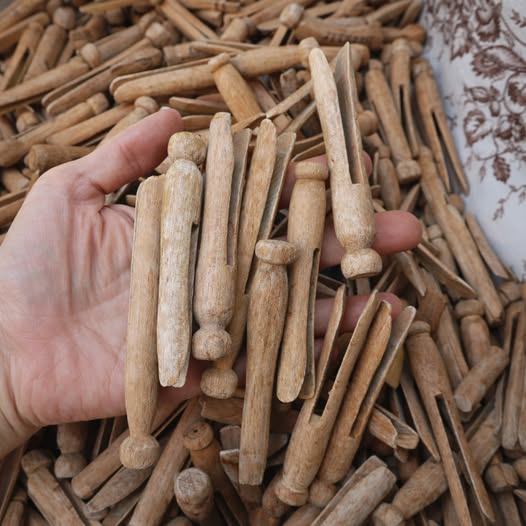
Recently, an online user stumbled upon small wooden dowels with two “legs” and turned to social media for answers. The response was immediate and nostalgic. Many commenters recognized them as old-school clothespins, used to clip wet laundry to an outdoor clothesline so it could dry naturally in the sun and breeze.
What exactly is a wooden clothespin?
A wooden clothespin is a traditional household tool designed to secure clothing to a line while it dries. Most modern versions are made from:
- Two wooden pieces joined together
- A spring or wire hinge mechanism that provides tension
- A clamp-like shape that grips fabric without slipping
This design helps clothes stay in place even when wind picks up, preventing laundry from falling onto the ground—or blowing away entirely.
From ancient solutions to early handcrafted pegs
The idea of fastening laundry is not new. People have been inventing ways to hold garments in place since ancient times, using whatever materials were available.
Early clothespin-like tools were often:
- Hand-carved and handmade
- Made from wood, bone, or stone
- Sometimes decorated with ornate patterns or motifs
- Built for function first, but occasionally crafted with care and style
These early devices looked very different from the clothespins many people recognize today, but the goal was the same: stop wet fabric from slipping or flying away while drying.
The 19th century: when the “modern” clothespin took shape
As households expanded and laundry loads grew, the need for a more effective fastening tool increased. During the 19th century, the clothespin evolved into a more standardized and reliable device.
Key improvements included: