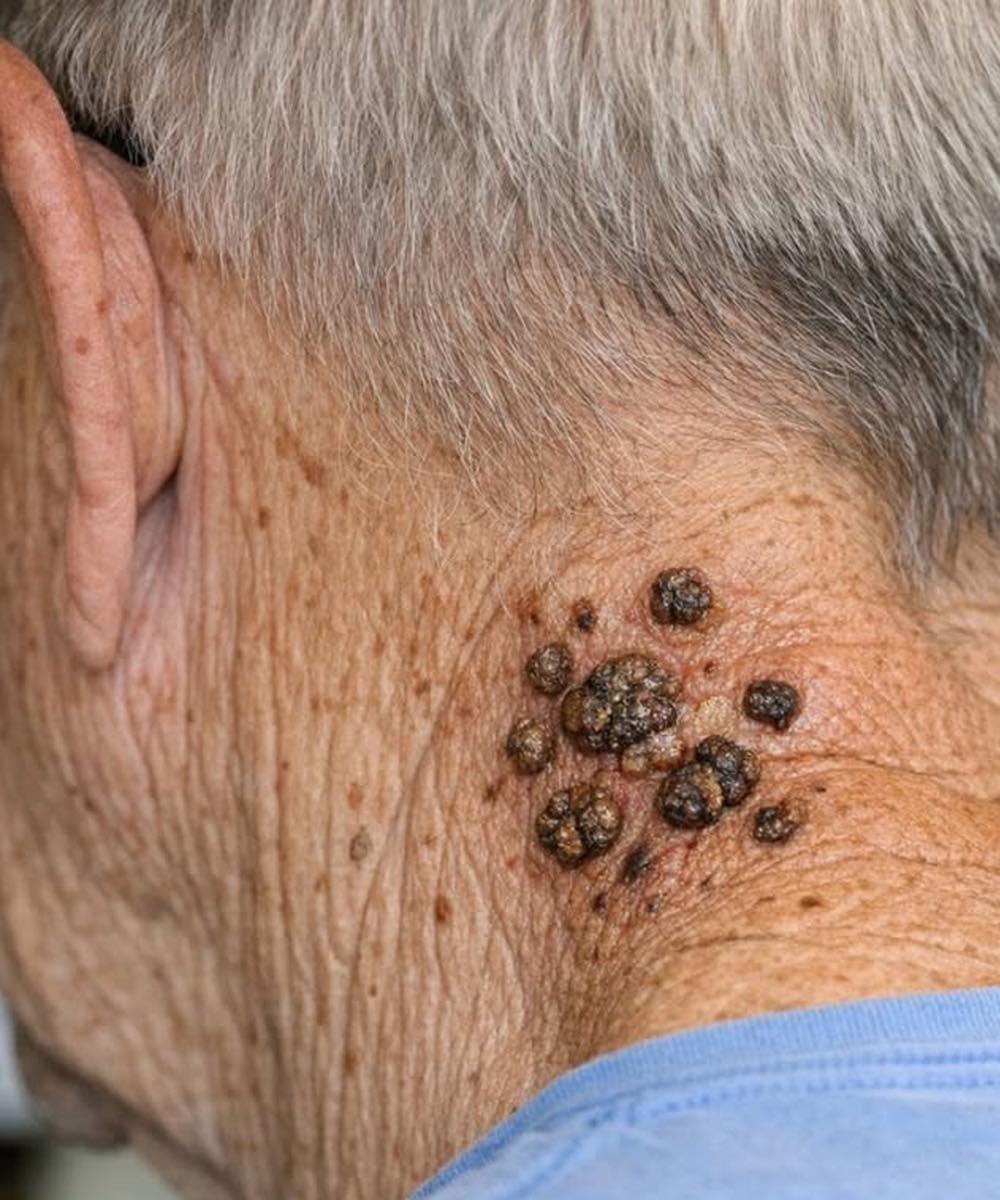
If your grandpa has dark, waxy bumps on his neck that itch, the most likely explanation is seborrheic keratosis — a very common, non-cancerous skin growth that appears more often as people age.
Here’s what that means and what you should know.
- What Those Dark, Waxy Bumps Usually Are
Seborrheic keratoses are benign (non-cancerous) skin growths that frequently develop after age 50. They can appear suddenly or slowly over time.
They typically:
Look brown, black, or tan
Have a waxy, scaly, or slightly raised surface
Appear “stuck on” the skin
Range from very small to over an inch wide
Common areas include the neck, chest, back, scalp, and face.
- How To Recognize Seborrheic Keratosis at Home
They often have these features:
A waxy or wart-like texture
A well-defined border
A “pasted-on” appearance
A rough or crumbly surface
Mild itching (especially if irritated by clothing)
They may appear alone or in clusters.
If the bumps on his neck look like small pieces of melted candle wax sitting on the skin, that’s a classic description.
- How They Differ From Skin Cancer
Seborrheic keratoses can sometimes resemble skin cancer, but there are key differences.
Seborrheic keratoses usually:
Have even coloring
Have clear borders
Maintain a consistent shape
Skin cancers (like melanoma) often:
Have uneven edges
Show multiple colors
Appear asymmetrical
Change over time
That said, any growth that changes, bleeds, or looks unusual should be checked by a doctor.
- Why Age Matters
These growths are extremely common in adults over 50. Skin naturally changes with age, and years of sun exposure may contribute.
They can occur in all skin tones, though they may be more noticeable in lighter skin.
In many cases, they are simply part of the normal aging process.
- What Causes Them?
The exact cause isn’t fully understood, but possible factors include:
Long-term sun exposure
Genetics (they often run in families)
Skin aging
Friction or irritation
If they’re itching, it could be from rubbing against collars, shaving, or dry skin.
- When Itching or Bleeding Is Concerning
Most seborrheic keratoses are harmless. However, seek medical evaluation if:
The bump grows rapidly
It changes color or shape
It bleeds without being scratched
It becomes very painful
It looks significantly different from his other spots
Persistent irritation can also lead to infection.
- How Doctors Confirm the Diagnosis
A dermatologist can usually identify seborrheic keratosis just by looking at it.
They may use:
A dermatoscope (a magnifying tool)
A biopsy (if anything looks suspicious)
Biopsies are quick and done in-office if needed.
- Treatment Options (If Needed)
Treatment isn’t required unless the bump:
Itches frequently
Gets irritated
Causes cosmetic concern
Removal options include:
Cryotherapy (freezing with liquid nitrogen)
Curettage (gently scraping it off)
Laser treatment
These are quick, outpatient procedures with minimal recovery time.
- What Not To Do
It’s important not to try removing them at home.
Avoid:
Cutting
Picking
Scratching
Using harsh over-the-counter “wart removers”
DIY removal can cause:
Bleeding
Infection
Scarring
Misdiagnosis of something serious
Always consult a healthcare professional first.
- How To Approach the Conversation
If your grandpa hasn’t seen a doctor about it yet, you can say something simple like:
“These are probably harmless, but let’s have a doctor check them just to be safe.”
Offer to go with him if he feels hesitant. Writing down symptoms — like itching or any recent changes — can help at the appointment.
Bottom Line
Dark, waxy, itchy bumps on an older adult’s neck are most often seborrheic keratoses, which are harmless and very common.
However, because skin cancer can sometimes mimic their appearance, a professional evaluation is always the safest choice if there’s any doubt.
If you’d like, you can describe how big they are, what color they are, and whether they’ve changed — and I can help you think through whether it sounds typical or worth urgent evaluation.