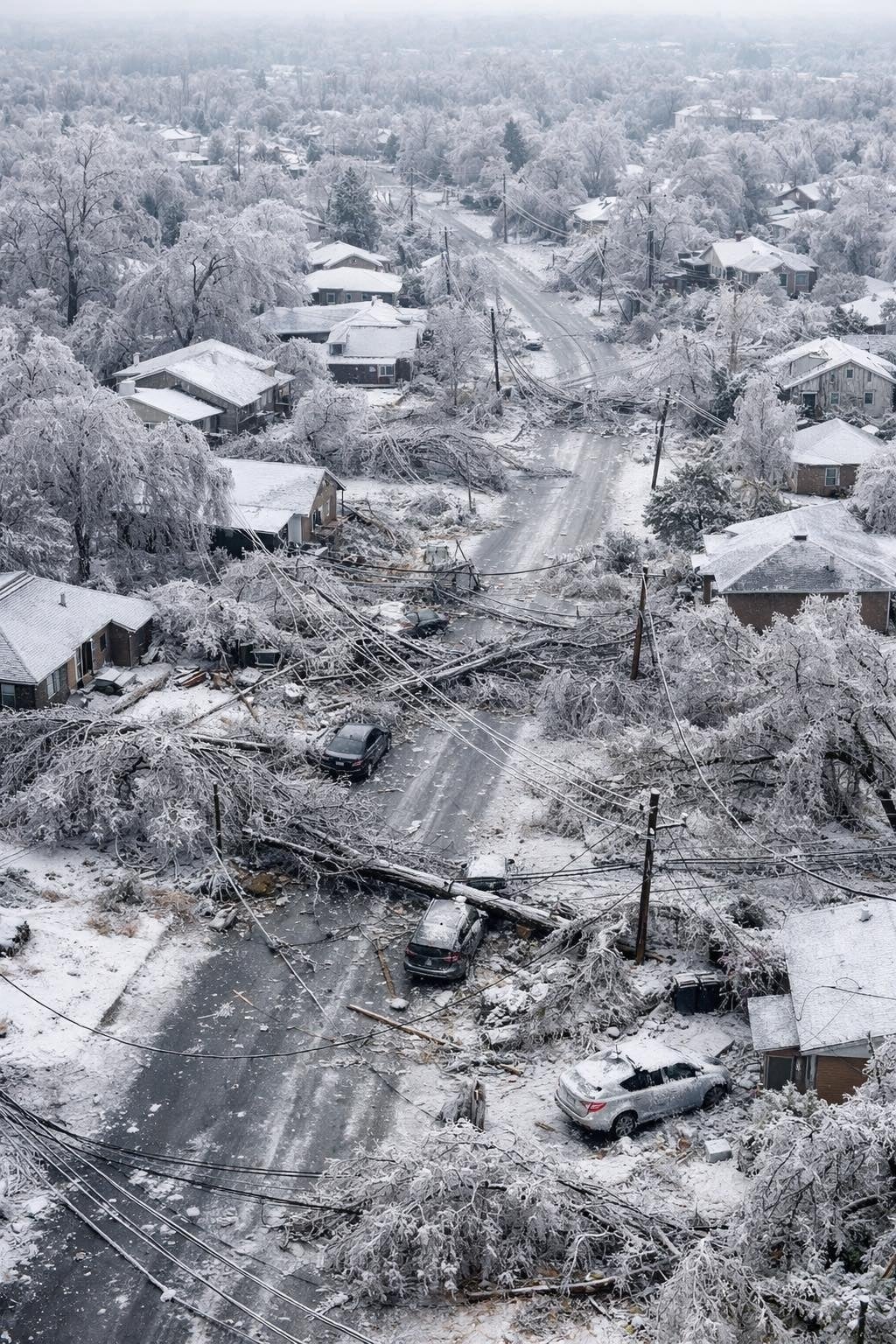
A massive ice storm has wreaked havoc across Tennessee, leaving more than 288,000 households without electricity and severely impacting communities throughout the state. The Nashville area, along with neighboring towns in Middle Tennessee, is experiencing the full force of this severe winter storm. For hours, residents have endured relentless freezing rain, which has created treacherous conditions on roads and damaged infrastructure, overwhelming local emergency services.
The relentless accumulation of ice has taken a heavy toll on power distribution networks. Power lines, weighed down by thick layers of ice, have snapped or fallen entirely, plunging entire neighborhoods into darkness. Utility crews are working under hazardous conditions to restore electricity, but the scale of the damage and ongoing storm activity has made immediate restoration challenging. Residents are urged to exercise extreme caution, especially around downed lines, as these pose significant electrocution risks.
Trees, burdened by the icy coating, are fracturing under their own weight, sometimes collapsing onto streets, vehicles, and even homes. In some areas, large trees have exploded from the pressure of the ice, sending shards of wood in multiple directions. These incidents have caused additional property damage and further blocked already dangerous roadways. Emergency crews are responding as quickly as possible, but the widespread nature of the storm has stretched resources thin.
Motorists are facing perilous driving conditions. Roads across the region have turned into solid sheets of ice, making travel nearly impossible. Many drivers have become stranded, unable to move their vehicles safely, while others risk skidding off roads or into obstacles. Authorities have issued warnings to avoid non-essential travel until conditions improve, emphasizing that even short trips can be life-threatening during the height of the storm.
Homes across Middle Tennessee are under increasing stress as the ice accumulates on roofs. The weight of thick ice presents structural hazards, potentially leading to roof collapses. Residents are advised to monitor their homes carefully and stay alert for signs of structural compromise. In some communities, people have begun seeking temporary shelters as the ice storm continues to escalate, with local authorities setting up warming centers to assist those without power.
Officials have described the situation as extremely critical, with some areas still experiencing ongoing ice accumulation. The combination of widespread power outages, hazardous travel conditions, and potential property damage has created an environment where emergency response is urgent and ongoing. First responders are working around the clock, risking their own safety to assist stranded motorists, clear debris, and provide aid to residents affected by the storm.
The human impact of the storm is significant. Families are coping with extended periods without heat, electricity, or access to essential services. Local shelters and community organizations have mobilized to provide blankets, food, and safe spaces for residents in need. Health professionals are also alerting people to the dangers of hypothermia and frostbite, emphasizing the importance of staying indoors and maintaining warmth during prolonged power outages.
Community solidarity is emerging as neighbors check on one another and local volunteers assist with emergency efforts. Residents are being encouraged to stay informed through local news channels and official social media updates to monitor storm developments and understand which areas are most at risk. Officials continue to urge caution, noting that conditions may worsen before improving, and ice removal and restoration efforts could take days or even weeks in some locations.
Authorities have expressed gratitude to first responders, utility crews, and volunteers who are working tirelessly in dangerous conditions to restore safety and stability. Their efforts are crucial in preventing further injury and mitigating damage as the storm continues its grip on Tennessee. Residents are being asked to heed all safety instructions, limit travel, and remain patient as crews navigate the difficult task of repairing infrastructure in icy conditions.
In summary, Tennessee is experiencing one of the most severe ice storms in recent memory. More than 288,000 households remain without power, roads are treacherous and impassable, and homes face structural hazards due to ice accumulation. Trees and power lines are failing, vehicles are being crushed, and first responders are under immense pressure. Communities are rallying together to support those affected, and the focus remains on safety, resilience, and recovery as the storm continues to impact Middle Tennessee.
Residents are asked to keep Nashville and surrounding areas in their thoughts and remain vigilant as conditions remain critical. This ice storm serves as a stark reminder of the power of severe winter weather and the importance of preparedness, community cooperation, and the tireless work of emergency services.
Tennessee Endures Widespread Power Failures and Hazardous Conditions as a Historic Ice Storm Strikes
A significant portion of Tennessee is currently grappling with a powerful and destructive ice storm that has disrupted daily life, caused extensive damage to infrastructure, and left hundreds of thousands of residents without electricity. The storm’s effects are far‑reaching, with the Nashville metropolitan area and surrounding counties in Middle Tennessee bearing the brunt of its impact. Through hours of relentless freezing rain, communities have struggled with dangerous travel conditions, compromised power systems, and a growing need for emergency response and recovery efforts.
Across the state, utility companies report that more than 288,000 homes and businesses are without electrical power. This number continues to climb as ice continues to accumulate on lines, poles, and trees. The storm’s severity has overwhelmed local response capacities in many areas, prompting coordinated efforts from state and federal resources in addition to local first responders.
Hazardous Weather Conditions and Ice Accumulation
The ice storm began as a band of moist air moving across the region collided with a sudden drop in temperature. Rather than falling as snow, precipitation froze upon contact with surfaces, forming thick layers of ice. Roads, bridges, and overpasses have transformed into slick, treacherous sheets, making travel dangerous even for essential vehicles. The ice has accumulated on virtually every exposed surface — from tree branches to roofs — causing widespread disruption.
Freezing rain is one of the most insidious forms of winter precipitation because it adheres to surfaces instantly and becomes extremely heavy as it builds up. The weight of this ice has caused trees and large limbs to collapse unexpectedly, sometimes with explosive force as trapped water expands and fractures wood. These falling trees have damaged cars, crushed structures, and further strained already vulnerable power grids.
Officials warn that ice accumulation on roofs is a serious structural risk. Buildings that are not designed to withstand such loads could experience partial roof collapse, especially if the ice continues to build. Residents are being advised to monitor their homes for signs of structural stress and to avoid areas immediately beneath large roof overhangs and trees.
Power Infrastructure Under Extreme Strain
The most immediate consequence experienced by residents has been the prolonged loss of electricity. Ice‑coated power lines are vulnerable because the added weight dramatically increases the tension on cables and utility poles. In many areas, lines have snapped or sagged dangerously low, forcing utility crews to de‑energize sections of the grid in order to work safely.
Utility workers are responding around the clock, despite hazardous conditions, to restore power. However, crews face significant challenges:
-
Access issues: Many roads remain blocked by ice or fallen trees, making it difficult for repair teams to reach damaged sites.
-
Safety hazards: Workers must navigate fragile ice‑laden wires and unpredictable weather while performing complex, high‑risk repairs.
-
Scale of damage: With widespread outages across multiple counties, the demand for repairs far exceeds the number of available crews, requiring coordination from neighboring states and federal assistance in some cases.
Officials are urging residents to assume that downed lines may still be live and dangerous. They remind people to stay at least 10 meters (30 feet) away from any fallen wires and to report them immediately to local authorities or utility companies.
Travel and Road Conditions: A Public Safety Crisis
Across Tennessee, roads have become virtually impassable. Even main highways, regularly treated and cleared during winter events, are coated in layers of ice that make braking and steering extremely difficult. State police and transportation officials have issued urgent travel advisories, urging residents to remain off the roads unless travel is absolutely necessary.
Stranded drivers have been reported throughout the region. Some families have abandoned vehicles and sought refuge in nearby homes, businesses, or emergency shelters after hours of being unable to move safely. In extreme cases, emergency responders have been forced to rescue individuals trapped inside their cars for extended periods.
Authorities emphasize that even four‑wheel drive and all‑season tires offer limited protection on solid sheets of ice. As one public safety official stated, “Conditions have become extremely critical. The roads are not safe for travel, and we cannot risk additional loss of life during response efforts.”
Impact on Homes and Community Services
Beyond power outages and treacherous roads, the storm has disrupted essential services. Electronics, heating systems, and water pumps are non‑functional in many homes without electricity, creating discomfort and potential health risks, particularly for vulnerable populations like the elderly and young children.
Local municipalities have opened warming centers and emergency shelters to provide heat, charging stations, and restrooms for residents who have lost power. These centers are staffed by volunteers and emergency personnel working long shifts under difficult conditions to support their communities.
In addition, healthcare providers are reporting an increase in weather‑related injuries, including:
-
Slips and falls on icy walkways and driveways
-
Overexertion injuries from people attempting to clear heavy ice and snow
-
Frostbite and hypothermia in individuals who lack adequate heating
Medical facilities are reminding residents to take precautionary steps when venturing outside and to avoid overexertion during snow and ice removal.
Community Response and Solidarity
Despite the overwhelming nature of the storm, communities across Middle Tennessee are showing remarkable resilience. Neighbors are checking on one another, especially elderly or vulnerable residents, and sharing resources such as generators, blankets, and food. Local faith groups, volunteer organizations, and relief agencies are mobilizing to coordinate assistance and comfort those affected.
Social media platforms are filled with stories of mutual support — homeowners helping clear icy driveways for neighbors, community centers offering warm spaces, and volunteers setting up donation drives for those in need. A strong sense of unity is emerging, reflecting a collective effort to withstand the storm’s challenges together.
Expert Insights: Why Tennessee Was Hit Hard
While Tennessee occasionally experiences winter weather, storms of this intensity are relatively rare. Meteorologists note that a combination of atmospheric conditions contributed to the unusually severe freezing rain event:
-
Warm air aloft: A layer of warmer air high in the atmosphere caused falling snowflakes to melt into rain.
-
Cold surface temperatures: Temperatures at ground level were well below freezing, causing the rain to freeze instantly on contact.
-
Slow‑moving system: The storm stalled over the region, resulting in extended periods of precipitation and continuous ice accumulation.
This combination is particularly hazardous because it creates widespread freezing rain rather than snow, leading to surfaces becoming rapidly and uniformly coated with ice.
Climate scientists also emphasize the importance of understanding long‑term patterns in weather behavior. While no single storm can be attributed to climate change, shifts in atmospheric circulation and temperature gradients can influence the frequency and intensity of winter storms. Research suggests that warming in the Arctic and other regions can destabilize traditional weather patterns, potentially increasing the likelihood of extreme events like prolonged ice storms in areas that are not typically prepared for them.
Safety Tips for Residents Affected by Winter Storms
In the midst of this severe weather event, safety remains a top priority. Officials and emergency management agencies recommend the following precautions:
Managing Without Power
-
Stay warm: Use blankets, layered clothing, and warm beverages to maintain body heat.
-
Use generators safely: If using a generator, keep it outside and away from windows to prevent carbon monoxide poisoning.
-
Preserve food: Keep refrigerator and freezer doors closed as much as possible to retain cold temperatures for longer.
Preventing Home Injuries
-
Be cautious on ice: Wear shoes with good traction and take small steps on icy surfaces.
-
Avoid overexertion: When clearing ice, take frequent breaks and avoid heavy lifting to reduce the risk of heart strain.
-
Check heating systems: Ensure space heaters are placed away from flammable materials and never left unattended.
Travel Safety
-
Limit travel: Only go out if absolutely necessary.
-
Emergency kit: If travel cannot be avoided, carry a winter emergency kit including blankets, food, water, and a flashlight.
-
Stay informed: Monitor local weather updates and obey official travel advisories.
Long‑Term Recovery and Resilience
As ice removal crews and utility workers continue their efforts, focus will gradually shift toward long‑term recovery. This includes repairing damaged infrastructure, removing fallen trees and debris, and supporting residents whose homes have suffered significant damage. Local governments are already planning assessments of structural risks and coordinating with state agencies to secure funding and resources for rebuilding.
Community leaders are also using this event as a learning opportunity, reviewing preparedness plans and identifying areas where improvements can be made to better withstand future winter storms. Investments in infrastructure reinforcement, community education about winter weather hazards, and coordination among emergency agencies are key components of building resilience.
Looking Ahead
While the immediate danger from the ice storm will eventually subside, the effects are likely to be felt for weeks to come. Restoration of power, repair of damaged equipment, and recovery of normal services will take time — especially as crews work cautiously to ensure safety in continuing cold conditions.
Residents are reminded to continue following guidance from local authorities and to support one another during the recovery period. The solidarity shown in the face of adversity is a testament to the strength and compassion of Tennessee communities.