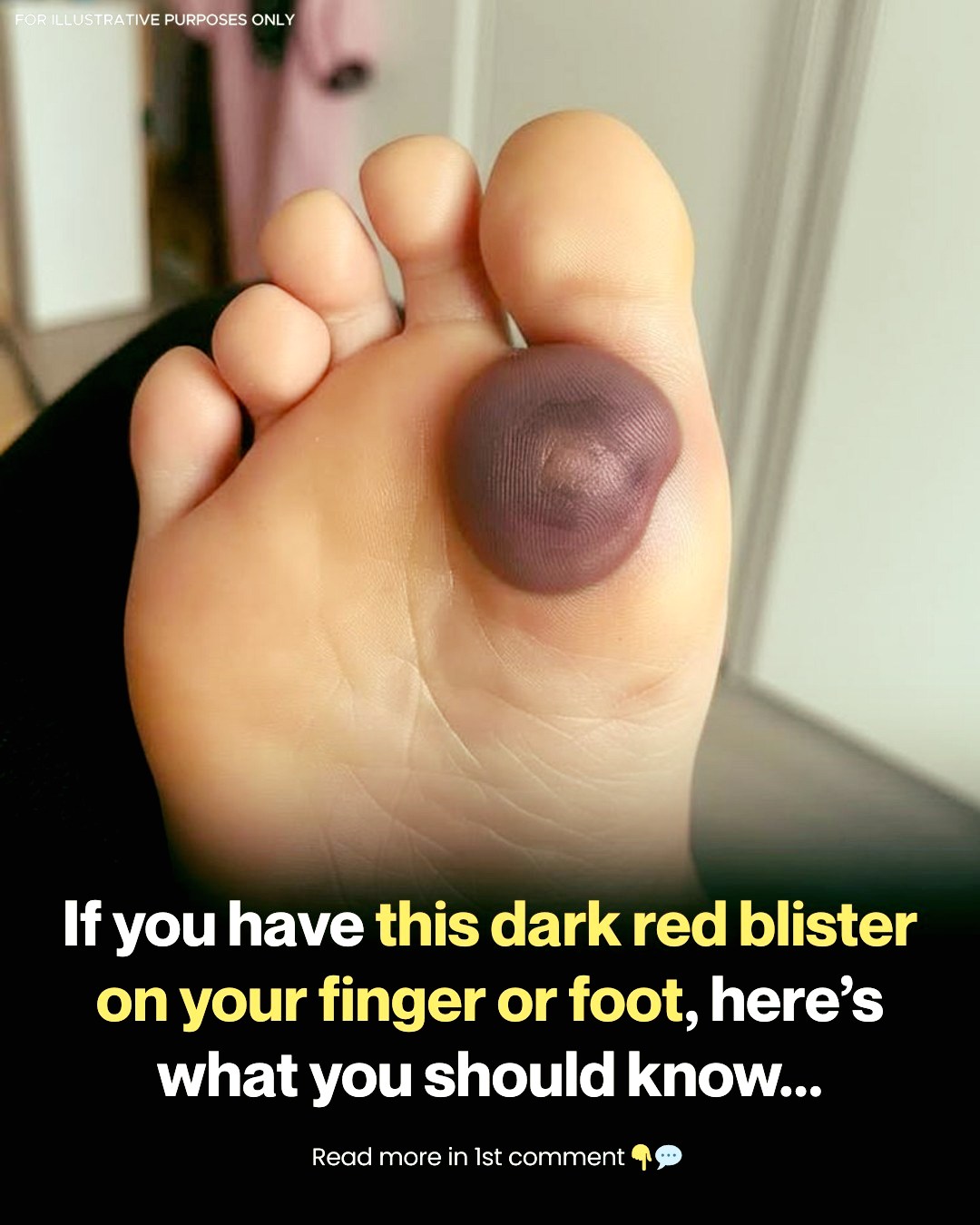
A blood blister forms when shearing force or pressure damages tiny blood vessels (capillaries) in the dermis (the layer beneath the outer skin), but the epidermis remains intact.

Here’s what happens step by step:
- Pressure or trauma compresses the skin against bone or a hard surface
- Capillaries rupture, leaking blood
- The blood becomes trapped beneath intact skin
- The body isolates the blood, forming a protective pocket
Because blood is thicker and darker than clear blister fluid (serum), the blister appears deep red, purple, or black rather than clear.
Blood Blister vs. Regular Blister vs. Bruise
Understanding the difference helps prevent unnecessary worry:
Blood Blister
- Blood trapped under intact skin
- Raised, bubble-like
- Often painful due to pressure
- Heals as blood is reabsorbed
Friction (Clear) Blister
- Filled with clear fluid
- Caused by rubbing
- Usually less dark in color
Bruise
- Blood spreads under the skin
- Flat, not raised
- Changes color over time (purple → green → yellow)
A blood blister is essentially a blister and a bruise combined, but contained in one small pocket.

Stages of Healing
Blood blisters usually heal without intervention through predictable stages:
1. Formation (Day 1–2)
- Blister fills with dark blood
- Area may throb or feel tight
2. Stabilization (Days 3–7)
- Pain decreases
- Color may darken as blood settles
3. Reabsorption (Days 7–14)
- Body slowly breaks down trapped blood
- Blister flattens
- Skin may look brownish before fading
4. Skin Renewal
- Outer skin sheds naturally
- New skin appears underneath
Do not peel the skin early, even if it looks loose—it protects healing tissue.

Why Blood Blisters Hurt More Than Regular Blisters
Blood blisters tend to be more painful because:
- Blood creates higher internal pressure
- The area is often near nerves (fingers, toes, soles)
- Swelling stretches surrounding tissue
Pain usually decreases once swelling stabilizes.
Special Considerations by Location
Fingers & Palms
- Often caused by tools, weights, doors, or sports
- Repeated trauma increases risk of recurrence
- Gloves can significantly reduce friction injuries
Feet & Toes
- Common with new shoes or long walking
- Moisture + friction increases blister risk
- Socks with moisture-wicking fabric help
Mouth (Oral Blood Blisters)
- Heal faster due to rich blood supply
- Can rupture quickly from chewing
- Saltwater rinses reduce bacteria and irritation
If oral blood blisters appear suddenly and repeatedly without injury, medical evaluation is recommended.
Conditions That Increase Blood Blister Risk
Blood blisters may form more easily in people with:
- Diabetes (fragile blood vessels, slower healing)
- Peripheral circulation problems
- Low platelet count or clotting disorders
- Vitamin deficiencies (especially vitamin C or K)
- Long-term steroid use (thins skin)
In these cases, blisters may heal more slowly and require closer monitoring.
Why You Shouldn’t Pop a Blood Blister
Popping a blood blister can:
- Introduce bacteria
- Increase infection risk
- Delay healing
- Lead to scarring
Unlike clear blisters, blood blisters contain nutrient-rich blood, which bacteria can thrive on if exposed.
If pressure is severe (for example, preventing walking), a healthcare professional—not home treatment—should evaluate drainage.
