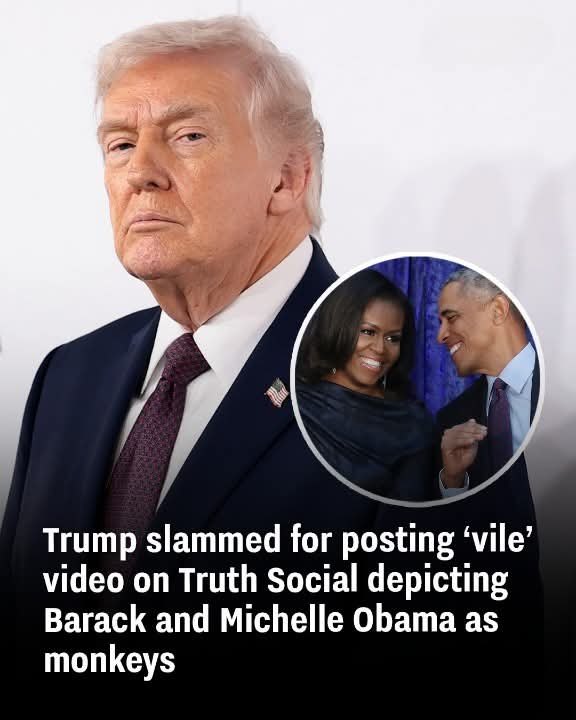
President Donald Trump sparked widespread outrage on Friday after sharing a controversial video on his Truth Social account that included a brief clip showing former President Barack Obama and former First Lady Michelle Obama with their faces superimposed on animated apes.
The roughly one-minute video — part of a longer clip amplifying unfounded claims about the 2020 election — features the smiling Obamas dancing to The Lion Sleeps Tonight near the end of the footage. The imagery invoked historically racist tropes comparing Black people to animals, prompting immediate criticism from across the political spectrum.
Within hours of its posting, the clip was removed. The White House said a staffer had “erroneously” uploaded the video, but critics said the explanation fell far short of acknowledging the harm caused.
Bipartisan Condemnation
The video drew swift and rare bipartisan rebuke. Republican Senator Tim Scott, the only Black member of the Senate GOP leadership, called it “the most racist thing I’ve seen out of this White House,” and urged its deletion.
California Governor Gavin Newsom blasted the post as “disgusting behavior by the President,” and demanded that Republicans denounce it.
Prominent Democrats, including House Minority Leader Hakeem Jeffries and Senate Majority Leader Chuck Schumer, condemned the imagery as racist and dangerous, saying it degraded public discourse and stoked division.
Civil rights organizations like the NAACP also weighed in, highlighting the long, painful history of dehumanizing racist depictions in American culture.
White House Response
Initially, White House press secretary Karoline Leavitt tried to dismiss the backlash as “fake outrage,” telling reporters the clip was part of an “internet meme” portraying Trump as “King of the Jungle” and other politicians as characters from The Lion King.
Later, officials said the video had been removed and attributed the posting to staff error. No public apology has been issued by the president himself.
Historical Context and Impact
The controversy comes during Black History Month, which many commentators said made the timing especially insensitive. Critics noted the problematic history of likening Black political figures to animals — a trope rooted in racist caricature and used to justify discrimination and violence.
The incident also underscores ongoing concerns about Trump’s frequent use of social media to share provocative, misleading, or AI-generated content. Some analysts say the episode could have longer-term implications for the president’s messaging strategy and public image.