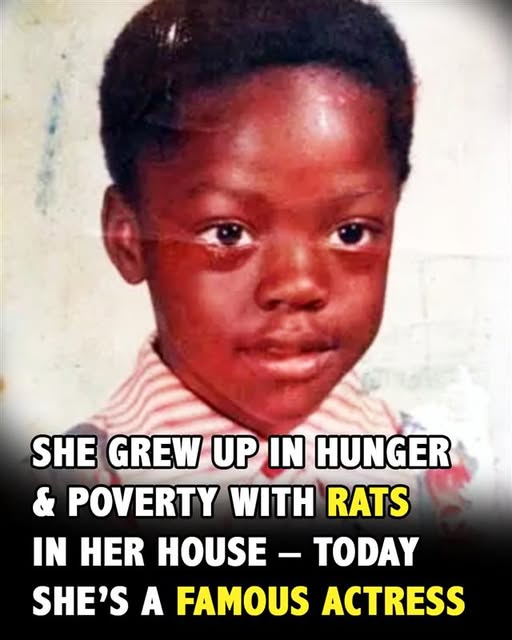
The story of Viola Davis is not merely a biography of a Hollywood star; it is a profound narrative of survival, a testament to the resilience of the human spirit, and a journey from the invisible fringes of society to the center of the global stage. At 59, Davis stands as a powerhouse of the acting world, but the foundation of her greatness was poured in the red clay of South Carolina and the condemned tenements of Rhode Island. To understand the woman who commands the screen today, one must look back at the young girl who once lived in a world where the primary colors were hunger, shame, and the desperate hope for an exit.
Born on August 11, 1965, in St. Matthews, South Carolina, Viola entered a world that seemed determined to limit her before she took her first breath. She was born in a one-room shack on her grandmother’s farm, a plot of land that carried the heavy, ancestral weight of having once been a plantation. This was the deep South in the mid-sixties, an era where the Civil Rights Movement was in full roar. Her mother, a maid and a dedicated activist, was once arrested during a protest, and a two-year-old Viola was taken to jail alongside her—a literal baptism by fire into the struggle for dignity and equality.
When the family relocated to Central Falls, Rhode Island, they sought a sanctuary from the overt oppression of the South, only to find that poverty and discrimination were traveling companions. In a town spanning barely over a square mile, the Davis family lived in a condemned building that lacked the most basic human necessities: working plumbing, consistent heat, and security from the infestation of rats. For Viola, the second youngest of six children, life was a constant tactical maneuver against lack. Racism persisted even in the North; she recalls people refusing to use a water faucet after her family had touched it, a visceral sting of “otherness” that targeted her before she even reached double digits.
Poverty, as Davis frequently observes, is a form of invisibility. When you have no demographic value and no access to resources, you exist in a shadow world. Hunger was her constant companion. She and her siblings would wait for school lunches as their only guaranteed source of nutrition, often befriending classmates solely for the chance to sit at a table where three meals a day were a given. This desperation reached a breaking point when, at age nine, she was caught stealing food from a local store. The memory of the owner’s scream and the look of utter disdain in his eyes became a defining trauma, a moment where she felt categorized as “nothing.”
It was during this same year that Viola experienced a spiritual and emotional awakening. Overwhelmed by the domestic violence between her parents and the crushing weight of their circumstances, she suffered a breakdown. She ran into the bathroom, collapsed on the floor, and issued an ultimatum to the universe. She prayed with the raw, terrifying belief of a child, counting to ten and demanding that God take her away from that life. When she opened her eyes at the count of ten and found herself still on that bathroom floor, she didn’t find abandonment; she found a reason. As she reflects now, she realized she was left there so that she could remember. She was preserved in that hardship so that, once she gained the strength to escape, she could serve as a witness for every child who dreams while seeing no physical manifestation of those dreams.
The trajectory of her life seemed pre-ordained by the women who came before her. Her grandmother had been a house slave; her mother was a maid. In the socio-economic landscape of her youth, these were the only open doors. However, school became her lifeline. Immersing herself in sports, music, and drama, Viola found an escape from the unwashed clothes and the stigma of the food stamp line. At age seven, she and her sisters were already creating skits and costumes, turning their trauma into performance. This spark was fanned into a flame by the Upward Bound program, which eventually led her to Rhode Island College as a theater major.
Her ascent from that point was nothing short of miraculous. Her talent was so undeniable that a professor famously described her as a “talent that doesn’t come down the pike very often.” This momentum carried her to Juilliard, one of the most prestigious performing arts institutions in the world. Out of 2,500 applicants, Viola secured one of only 14 spots, joining the ranks of legends like Christopher Reeve and Robin Williams. Juilliard didn’t just hone her craft; it validated her existence.
Her professional journey began on the stage, where she earned a Tony nomination at 29 for her role in August Wilson’s Seven Guitars. She recalls her father crying in the audience on opening night—a moment of profound healing for a family that had known so much struggle. From the theater, she transitioned to film, where her impact was immediate and seismic. Her eight-minute performance in Doubt (2008) earned her an Oscar nomination, followed by another for The Help (2011). In 2015, she made history as the first Black woman to win the Emmy for Outstanding Lead Actress in a Drama Series for How to Get Away with Murder. By the time she won an Oscar for Fences in 2017, she had cemented her status as one of the greatest actors of any generation.
Despite the accolades, Davis has never severed the cord to her past. She remains a fierce advocate in the fight against childhood hunger, using her platform to raise millions for campaigns like Hunger Is. She often reminds the public that in the richest country in the world, there is no logistical excuse for a child to go to school hungry. Her memoir, Finding Me, serves as a bridge to her younger self, exploring the “complete absence of love” she felt during her father’s struggles with alcoholism and abuse, and her ultimate journey toward forgiveness.
In a poignant full-circle moment, Davis purchased the South Carolina house where she was born on her 55th birthday. It was a symbolic reclamation of her origins—owning the land that once owned her ancestors. Today, her life is defined by the stability she once craved. Married to producer Julius Tennon and mother to their daughter, Genesis, she has built the sanctuary she once prayed for.
Viola Davis is a reminder that the past does not have to be a prison; it can be a wellspring of empathy and power. She continues to “heal the little girl” who followed her out of Central Falls, ensuring that her story serves as a beacon for anyone who feels invisible. Her journey proves that while you cannot choose where you start, the vision, strength, and forgiveness you cultivate along the way can redefine where you finish.