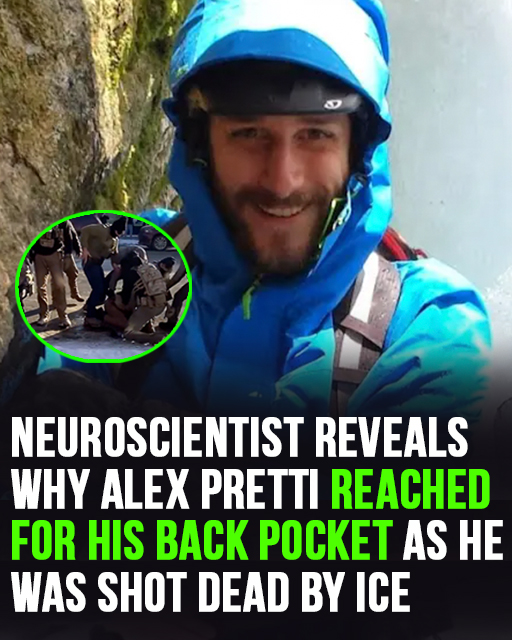
The fatal shooting of Alex Pretti, a 37-year-old intensive care nurse, has transformed the city of Minneapolis into a flashpoint of national debate, casting a harsh spotlight on the intersection of federal immigration enforcement, civil liberties, and the psychology of human reaction under extreme stress. On January 24, 2026, Pretti’s life ended during a confrontation with federal agents from U.S. Immigration and Customs Enforcement (ICE) and Customs and Border Protection (CBP). While the administrative gears of justice begin their slow grind, the public is left grappling with newly released footage, conflicting official narratives, and a neuroscientific inquiry into the final, instinctive movements of a man in his last moments of life.
Alex Pretti was not an individual typically associated with federal enforcement actions. A dedicated nurse at a local VA hospital, he was known for his commitment to the veterans he served and had no significant criminal history. On the day of the shooting, he was present during a large-scale immigration operation as a bystander and observer. Video captured by witnesses shows Pretti standing at a distance, holding his smartphone aloft to record the actions of the federal agents. This act of documentation, increasingly common in the modern era of social justice, appeared to be the catalyst for the interaction that followed. The footage shows a rapid escalation from verbal engagement to a physical struggle, culminating in the discharge of service weapons by two federal officers.
In the aftermath, a central question has emerged from the chaotic video evidence: why did Pretti reach for his back pocket? This specific movement has become a focal point for investigators and a point of contention for those defending the officers’ use of force. To address this, neuroscientists and use-of-force experts have begun to analyze the incident through the lens of human physiology and the “stress response” system. When a human being is subjected to a high-intensity, life-threatening situation, the brain’s prefrontal cortex—the area responsible for rational thought and complex decision-making—often yields to the amygdala, which governs the fight-or-flight response.
Experts suggest that Pretti’s reach toward his back pocket may not have been a conscious attempt to retrieve a weapon, but rather a deeply ingrained “muscle memory” or a protective reflex. For a nurse accustomed to reaching for medical tools or a phone to call for assistance, the movement could have been a desperate, subconscious attempt to find a lifeline. Alternatively, in the confusion of being pinned to the ground by multiple agents, the movement could have been a reflexive effort to adjust his balance or protect a vulnerable area. This neuroscientific perspective challenges the binary choice between “intentional threat” and “innocent bystander,” suggesting instead that in the heat of a violent encounter, human movement is often dictated by primal survival instincts rather than calculated aggression.
However, the official narrative provided by federal authorities paints a different picture. In testimony before Congress, representatives from Customs and Border Protection described the incident as an encounter with an armed threat. They allege that the officers perceived a firearm and acted to neutralize a danger to their lives. Standard protocol was followed as the two officers involved were placed on administrative leave, but the discrepancy between the official account and bystander footage has fueled a growing fire of public distrust. Eyewitness reports and high-resolution video analyzed by international news organizations appear to show Pretti already pinned to the ground and holding only his phone when the fatal shots were fired. While some footage suggests an agent may have removed an object from Pretti’s waistband earlier in the struggle, the sequence of events leading to the final shots remains clouded by the frantic nature of the recording.
The tension in Minneapolis was already at a boiling point before Pretti’s death. Earlier in January, another fatal encounter involving federal immigration agents had left the community reeling. The death of Alex Pretti served as the final spark in a city already grieving. In the days following January 24, hundreds of residents have gathered for vigils and protests, their voices echoing through the cold winter air as they demand transparency and accountability. Local leaders, including the Mayor and City Council members, have been vocal in their calls for an independent investigation, expressing concern that federal agencies should not be tasked with investigating their own conduct.
Currently, the investigation has become a multi-layered process involving several distinct agencies. The Department of Homeland Security is conducting an internal review of the tactics used during the operation, while the FBI has stepped in to analyze physical evidence and the ballistic reports from the scene. The aim of these inquiries is to piece together a second-by-second timeline of the shooting, determining exactly when the threat was perceived and whether the use of lethal force met the legal standard of being “objectively reasonable” under the circumstances.
The case of Alex Pretti is more than just a local tragedy; it is a microcosm of a larger struggle regarding the limits of federal authority and the rights of citizens to observe and record government actions. Different narratives have emerged, shaped by political leanings, personal biases, and the fragmented nature of social media reporting. To some, Pretti is a martyr for civil rights, a man killed for the “crime” of holding a camera. To others, the incident is a tragic reminder of the dangers faced by law enforcement officers working in high-tension environments where split-second decisions must be made.
As Minneapolis waits for the results of the federal inquiries, the image of Alex Pretti—a nurse, a son, and a citizen—remains at the forefront of the public consciousness. The neuroscientific explanation of his final reach provides a haunting layer to the tragedy, reminding us that in the moments before death, the human body acts with a logic of its own, often separate from the intentions of the mind. Whether he was reaching for a phone, a tool, or simply trying to survive, the result was a life extinguished and a city transformed. The quest for truth continues, but the scars left by the shooting of Alex Pretti will likely define the relationship between the people of Minneapolis and federal law enforcement for years to come. The call for transparency is no longer just a request; it is a demand for a reckoning with how power is exercised in the streets of America.