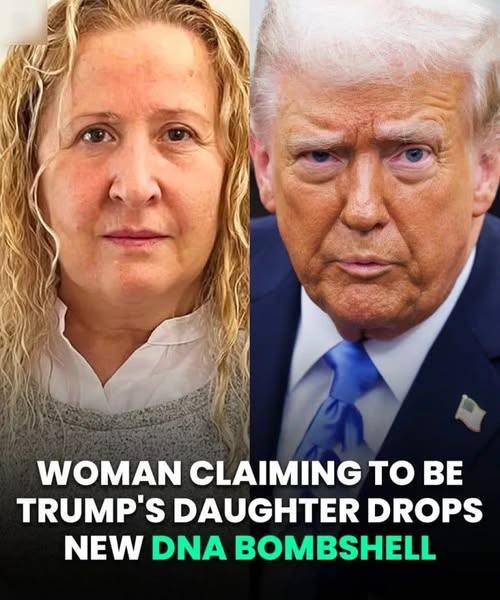
A Woman in Turkey Files a Lawsuit Claiming a Hidden Family Connection
A woman living in Ankara, Turkey, has brought forward a legal claim that has drawn international attention after she alleged a long-concealed family connection involving Donald Trump. The woman, named Necla Ozmen, has filed a paternity-related lawsuit asserting that she believes the former U.S. president is her biological father.
According to her statements, the claim is not based on a recent discovery but on information she says she uncovered gradually over many years. Ozmen maintains that she was raised under a different identity and that key details about her birth were intentionally withheld from her for decades.
Her legal filing does not present genetic proof at this stage. Instead, it formally requests that DNA testing be conducted in order to clarify her biological origins and resolve what she describes as a lifelong uncertainty about her identity.
Background on Necla Ozmen’s Early Life

Necla Ozmen was born in 1970 and grew up in Turkey. Legally, she is registered as the daughter of a Turkish couple, Sati and Dursun Ozmen. By all official records, she was raised as their biological child, and for most of her life, she accepted that understanding as fact.
However, Ozmen now claims that this version of events does not reflect what truly happened at the time of her birth. She alleges that she was adopted shortly after being born, though she was never formally told this during her childhood or early adulthood.
According to Ozmen, questions about her background lingered quietly for many years but were never fully addressed until much later in her life, when a private family conversation changed her understanding of her own origins.
The Conversation That Changed Everything
Ozmen says that in 2017, her legal mother, Sati Ozmen, shared a story that fundamentally altered her perception of her birth. She claims that Sati revealed she had not given birth to Ozmen in the conventional sense but had instead raised her after an unusual situation at a hospital.
According to Ozmen’s account, Sati explained that she had gone into labor at a Turkish hospital and was told that the baby she delivered had not survived. At the same hospital, Ozmen alleges, another woman—described as an American named Sophia—had also recently given birth.
Ozmen claims that this woman, Sophia, handed her newborn over to Sati to raise. She alleges that this exchange occurred under circumstances that were never documented publicly and were meant to remain confidential.
It is this alleged exchange that forms the foundation of Ozmen’s legal claim.
Allegations of a Hospital Baby Swap

Central to Ozmen’s story is the claim that a baby swap occurred at the hospital where she was born. She asserts that her legal mother experienced the loss of a child, while another woman voluntarily gave up her newborn.
Ozmen’s lawsuit does not include hospital records confirming such an event, nor does it name medical staff or witnesses who can verify the claim. Instead, it relies on what she describes as a personal family disclosure that was never officially recorded.
She argues that this lack of documentation is precisely why she is now seeking legal recognition and scientific verification through DNA testing. Without such testing, she says, it is impossible to confirm or deny the truth of what she was told.
The Claim of a Forbidden Relationship
Beyond the adoption claim, Ozmen further alleges that her biological parents were involved in a relationship that could not be made public at the time. She describes this relationship as forbidden due to social, cultural, or political circumstances, though she does not provide detailed evidence about the nature of those restrictions.
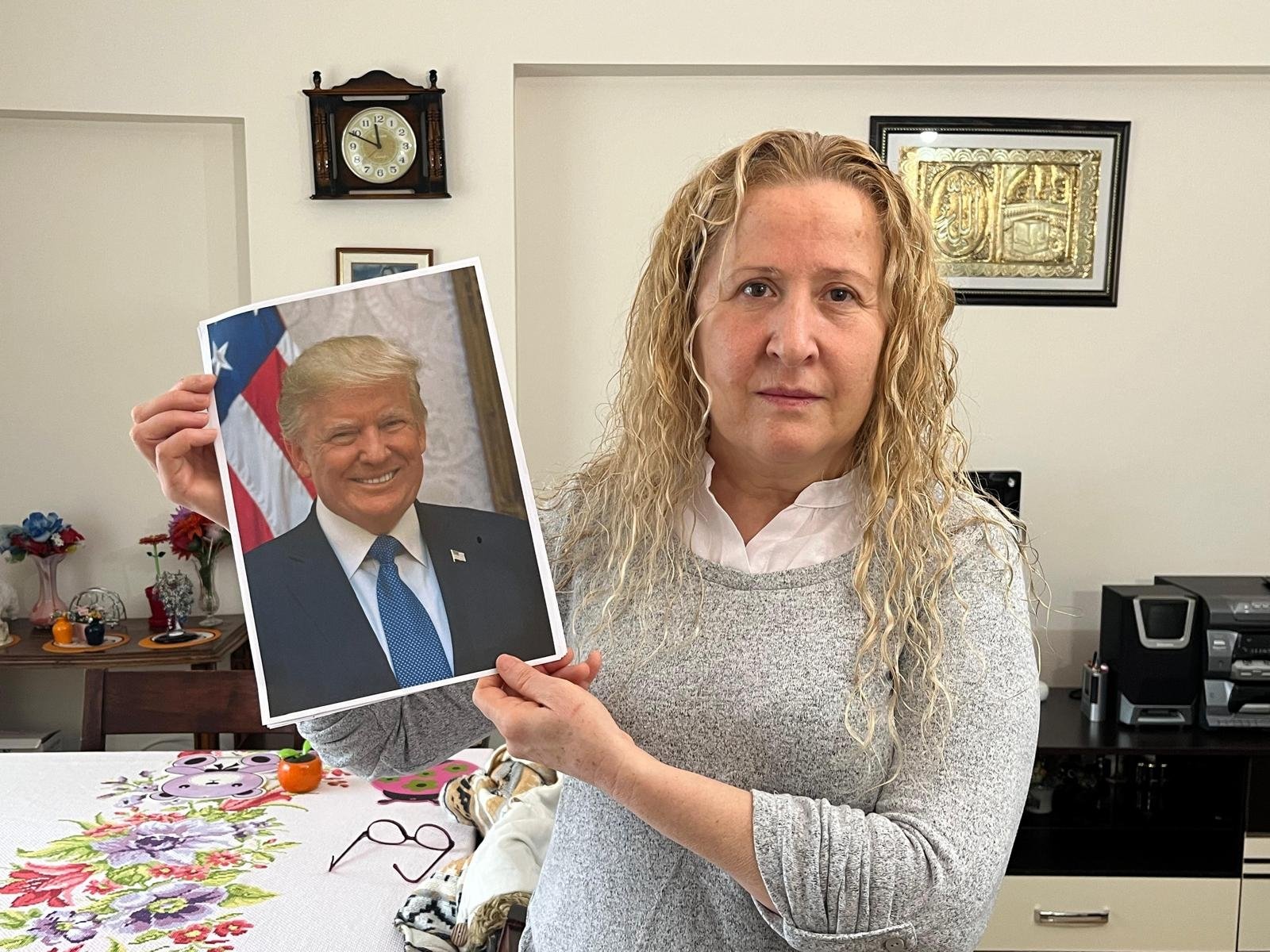
According to Ozmen, the American woman she refers to as Sophia allegedly showed Sati a photograph of the man she claimed was the child’s father. Ozmen now believes that man was Donald Trump, who at the time was a private businessman, years before entering politics.
Ozmen states that she was shown this image as part of the explanation she received in 2017. She says the image played a significant role in prompting her to question her identity more seriously and eventually pursue legal action.
Why Ozmen Is Demanding a DNA Test

Ozmen’s lawsuit does not ask the court to recognize her as a family member outright. Instead, her primary demand is for a DNA test to determine whether there is any biological connection between herself and the former U.S. president.
She argues that DNA testing is the only objective way to confirm or disprove her claim. Without genetic evidence, she acknowledges that her story remains an allegation rather than a verified fact.
From her perspective, the lawsuit is not about public attention but about closure. She has stated that she wants clarity regarding her biological origins, regardless of the outcome.
Legal and Scientific Standards in Paternity Claims
In most jurisdictions, paternity claims involving public figures are subject to strict legal and evidentiary standards. Courts generally require credible documentation, witness testimony, or scientific evidence before ordering DNA testing.
Legal experts often note that extraordinary claims require careful scrutiny, particularly when decades have passed and when the alleged events took place across international borders.
DNA testing, while highly accurate, typically requires the cooperation of all parties involved or a court order compelling participation. Whether such an order would be granted depends on the strength of the preliminary evidence presented.
No Public Confirmation or Denial
As of now, there has been no public confirmation of Ozmen’s claims. There is also no publicly reported response confirming participation in DNA testing.
Without genetic evidence, Ozmen’s assertions remain unverified. Media coverage has largely focused on summarizing the allegations rather than presenting them as established facts.
This distinction is important, as unproven claims—even when sincerely believed by the claimant—do not carry legal or factual weight until supported by evidence.
Public Interest and Media Caution
Stories involving prominent political figures naturally attract attention. However, responsible reporting requires careful language, especially when claims involve family relationships, identity, and personal history.
Many outlets have emphasized that Ozmen’s lawsuit represents a request for verification, not proof of a relationship. Until DNA testing is conducted and results are disclosed, the matter remains unresolved.
Such cases highlight the balance between an individual’s right to seek answers and the importance of avoiding premature conclusions.
What Happens Next in the Legal Process
The future of Ozmen’s case depends largely on how courts assess her request. Judges may evaluate whether the information provided meets the threshold required to justify further investigation.
If DNA testing is authorized and conducted, results would offer clarity—either confirming a biological link or definitively ruling it out. If testing is denied, Ozmen may have limited legal options remaining.
Regardless of the outcome, the case underscores how questions of identity can persist for decades and how modern genetic science has become a tool for resolving deeply personal uncertainties.
A Story Still Awaiting Answers
At present, Necla Ozmen’s claim remains exactly that—a claim. It is rooted in personal testimony, family conversations, and unresolved questions from the past.
Without DNA evidence, there is no confirmation of any biological connection. What exists instead is a legal request aimed at uncovering the truth, whatever that truth may be.
As the case unfolds, it serves as a reminder that stories involving identity and origin are often complex, emotionally charged, and not easily resolved without clear evidence.