Shockwaves in Tehran: Unverified Strike Report Sparks Global Attention and Raises Stakes in Iran–Israel Tensions
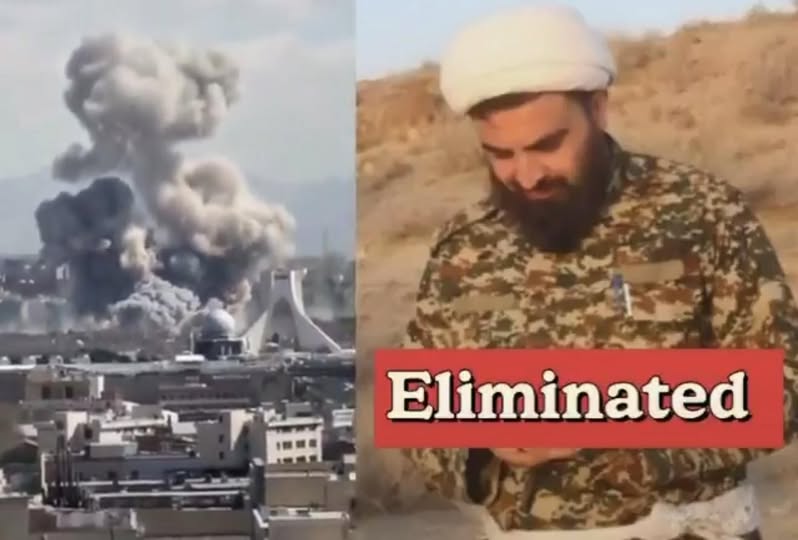
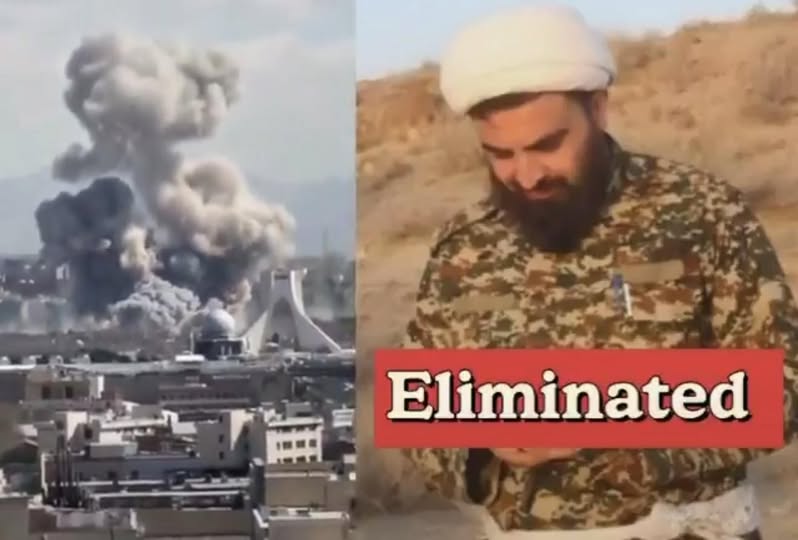
In a development that has rapidly captured international attention, unverified reports are circulating that a senior figure within Iran’s Basij forces, identified as Mohammad Ali Atarieh, may have been killed in a targeted strike in Tehran. The claims, first picked up by regional media and referenced by outlets such as Al Arabiya, suggest that the incident allegedly occurred on March 23, 2026, at or near a checkpoint in the Iranian capital.
While the details remain unclear and no official confirmation has been issued by Iranian authorities, the story has already ignited widespread discussion across political, media, and online communities. The speed at which the reports have spread highlights not only the global sensitivity surrounding Iran but also the powerful role of digital platforms in shaping real-time narratives during unfolding events.
Tehran, a city that often stands at the center of regional and international geopolitical discourse, has once again found itself in the spotlight. Any suggestion of a targeted strike within the city immediately raises serious questions about security, intelligence capabilities, and the broader balance of power in the Middle East. If confirmed, such an incident would mark a significant moment, potentially signaling a new phase in the long-standing tensions between Iran and Israel.
The Basij, the force at the center of these reports, plays a crucial role within Iran’s internal security framework. Operating under the umbrella of the Islamic Revolutionary Guard Corps, the Basij has been deeply involved in maintaining order during periods of unrest. Over the years, it has frequently been mentioned in discussions by international observers and human rights organizations concerning its role during protests and civil demonstrations.
Because of this, any reported targeting of a high-ranking Basij figure carries both symbolic and strategic weight. It is not simply about an individual—it is about what that individual represents within the broader system of governance and control. This is why the reports have resonated so strongly, even in the absence of official verification.
What makes the situation even more complex is the broader context in which it is unfolding. The relationship between Iran and Israel has long been characterized by indirect confrontation, often described by analysts as a “shadow conflict.” This includes alleged cyber operations, intelligence activities, and occasional strikes attributed to one side or the other, frequently without direct acknowledgment. These actions rarely occur in isolation; instead, they are part of a larger, ongoing strategic contest.
If the current reports are accurate, they could represent a bold escalation—particularly given the location within Tehran itself. Such a development would inevitably raise questions about response scenarios, deterrence, and the potential for further escalation. At the same time, experts caution that misinformation or premature conclusions in situations like this can be just as impactful as confirmed events, influencing public perception and political reactions before the facts are fully established.
Social media has played a central role in amplifying the story. Platforms like X, Facebook, and TikTok have been flooded with posts, videos, and commentary. Some users are sharing breaking updates, while others are offering analysis or expressing strong opinions. The result is a rapidly evolving информаtion environment where verified facts, speculation, and interpretation often blur together.
This dynamic underscores a key challenge of the modern information age: the race between speed and accuracy. In high-stakes geopolitical situations, the first version of a story is not always the correct one. Early reports can change, details can be clarified, and initial assumptions can prove inaccurate. That is why analysts and journalists consistently emphasize the importance of verification, especially when dealing with events that could have far-reaching consequences.
Meanwhile, global observers are watching closely for any official statements or confirmations. Governments, international organizations, and intelligence communities are likely assessing the situation behind the scenes, even as public information remains limited. Diplomatic channels may also be engaged quietly, particularly if there is concern about escalation or misinterpretation.
Another layer to this unfolding story is the broader narrative it feeds into. Events like this—whether confirmed or not—often become part of larger discussions about regional stability, security strategies, and international alliances. They can influence public opinion, shape policy debates, and even impact financial markets, particularly in sectors sensitive to geopolitical risk.
At the same time, it is important to recognize how quickly narratives can become polarized. Different audiences may interpret the same report in very different ways, depending on their perspectives, sources of information, and existing beliefs. This makes it even more critical to approach such stories with caution, avoiding definitive conclusions until credible evidence is available.
For now, the situation remains fluid. The world is waiting for clarity—whether through official confirmation, independent reporting, or further developments on the ground. Until then, the reported incident stands as a powerful reminder of how interconnected and sensitive the global landscape has become.
What is undeniable is the level of attention this story has already generated. Within hours, it has moved from a regional report to a topic of international discussion, demonstrating how quickly local events—or even unverified claims—can take on global significance.
As more information emerges, the true impact of this reported strike will become clearer. Whether it proves to be a confirmed event, a misreported incident, or something in between, its ripple effects are already being felt in the conversations, analyses, and reactions unfolding worldwide.
In moments like this, the line between breaking news and developing narrative becomes especially thin. And as the world watches, waits, and debates, one thing remains certain: the story is far from over.