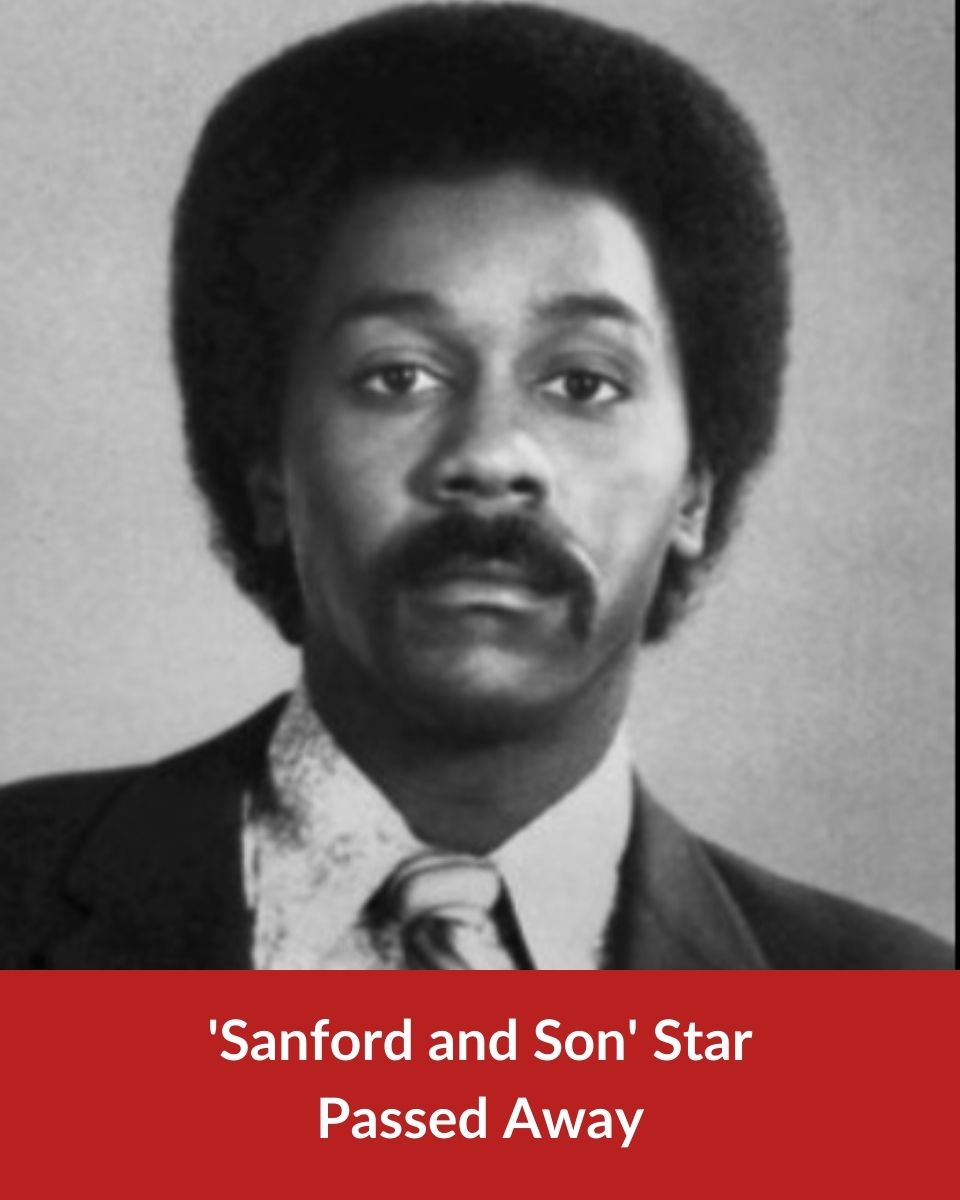
The television landscape of the 1970s was defined by a few singular voices and faces that managed to bridge the gap between comedy and the poignant reality of the American experience. Among the most enduring of these figures was Demond Wilson, the actor who gave life to Lamont Sanford on the seminal NBC sitcom Sanford and Son. It is with a heavy heart that the entertainment world acknowledges the closing of his final chapter. Grady Demond Wilson passed away on Friday morning, January 30, 2026, at his home in Palm Springs, California. He was 79 years old.
His son, Demond Wilson Jr., confirmed the news to media outlets, noting that his father died following a courageous battle with complications related to cancer. While the family did not disclose the specific nature of the illness, the outpouring of grief from fans and colleagues alike served as a testament to the man behind the character. “I loved him. He was a great man,” his son shared in a brief, moving tribute that echoed the sentiments of a generation who grew up watching the complex, often hilarious, and deeply moving bond between a father and son in a Los Angeles junkyard.
Born on October 13, 1946, in Valdosta, Georgia, Wilson’s journey to the heights of Hollywood was anything but traditional. Raised in the vibrant, demanding streets of New York City, he discovered a passion for performance early on, but his path was momentarily diverted by the call of duty. Wilson served in the United States Army during the height of the Vietnam War. His time in the military was marked by the harsh realities of combat; he was wounded in action, an experience that instilled in him a profound sense of perspective and resilience. Upon receiving an honorable discharge, he returned to New York to reclaim his dream, enrolling at the American Drama Studio to refine a craft that would soon make him a household name.
The year 1972 marked the beginning of a cultural phenomenon. Cast as Lamont Sanford, the level-headed, ambitious son of the cantankerous, “big dummy” Fred Sanford, Wilson found himself playing the “straight man” to the legendary comedian Redd Foxx. While Foxx provided the explosive laughs and the iconic heart-clutching “I’m coming to join you, Elizabeth!” gags, Wilson provided the show’s soul. He played Lamont with a sophisticated blend of frustration, loyalty, and deep-seated love. It was this chemistry—the push and pull between a son who wanted to move up in the world and a father who refused to let go—that became the emotional backbone of the series. For five years, Sanford and Son shattered ratings and social barriers, becoming one of the most influential sitcoms in television history.
However, the glitz of a hit television show often masks a more complicated internal reality. Following the show’s original conclusion in 1977 and a brief revival titled Sanford, Wilson found himself at a crossroads. While he continued to work steadily, appearing in popular programs like The Love Boat, Fantasy Island, and The New Odd Couple, the hollow nature of Hollywood fame began to weigh on him. He spoke candidly in later years about the pressures of the industry and his private battles with depression, a struggle that eventually led him away from the camera and toward a higher calling.
In the 1980s, Wilson underwent a profound spiritual transformation, becoming a born-again Christian. This was not a fleeting celebrity phase; it was a total recalibration of his existence. He walked away from the relentless pursuit of the next big role to found a church in Southern California. As a pastor, Wilson traded the applause of audiences for the fulfillment of community outreach, counseling, and spiritual leadership. He found his true “second act” in the pulpit, using his voice to guide others through the same types of personal struggles he had once faced alone.
Wilson also became an accomplished author, penning several books that offered a rare, unvarnished look at his life and the industry that made him famous. In his memoir, Second Banana: The Bittersweet Memoirs of the Sanford and Son Years, he provided a soulful reflection on his time with Redd Foxx and the complexities of playing a supporting role while navigating personal growth. He also explored more theological and contemporary themes in works like New Age Millennium Deception, showcasing a mind that remained inquisitive and dedicated to his faith until the very end.
Demond Wilson belonged to a rare class of performers who managed to outlive the “typecasting” that often dooms sitcom stars. While he will forever be remembered as Lamont, he spent the latter half of his life ensuring that he was defined by his character as a man, rather than just the character he played on a screen. He lived with a quiet dignity in Palm Springs, focusing on his family and his ministry, far from the frantic energy of the Los Angeles studios.
His passing leaves a void in the tapestry of classic television. To watch an episode of Sanford and Son today is to see an actor who was capable of doing so much with a single look—the way he would roll his eyes at his father’s schemes or the soft, silent way he would smile when Fred finally showed a moment of genuine affection. He was the anchor of that show, and in many ways, an anchor for the viewers who saw their own family dynamics reflected in the cluttered yard of a Watts junkyard.
As news of his death spreads, tributes continue to highlight his legacy as a veteran, an actor, a father, and a man of God. He leaves behind a body of work that continues to bring laughter to new generations through syndication, but more importantly, he leaves a legacy of redemption and purpose. He proved that even after the brightest lights of fame fade, one can find a steady, meaningful glow in the service of others.
The “son” in Sanford and Son has finally gone to rest, but the impact of his life—both the scripted moments and the deeply personal ones—will remain. Demond Wilson lived 79 years with a commitment to authenticity that is rare in any profession, reminding us that while fame is fleeting, faith and family are the only things that truly endure.