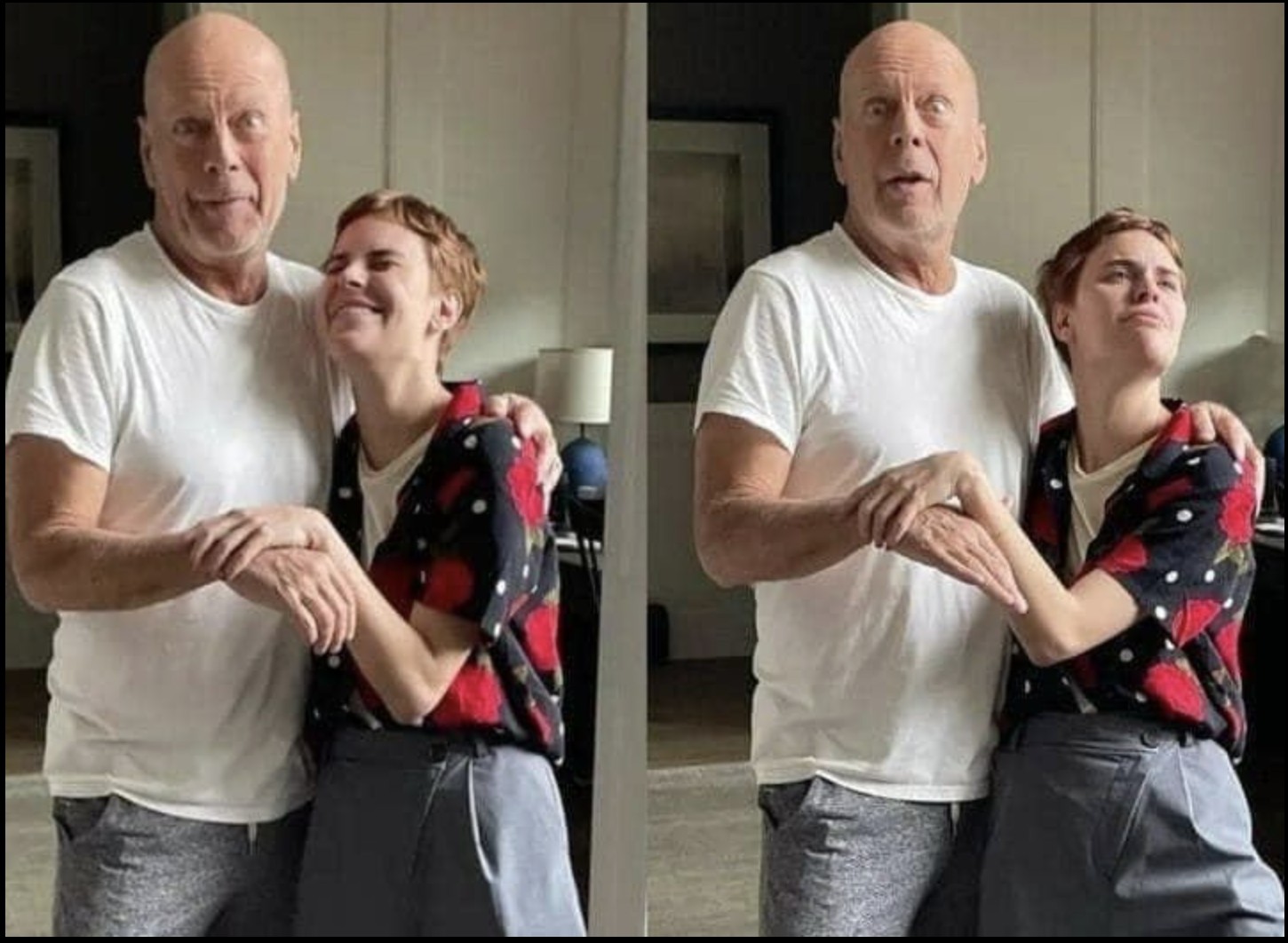
Bruce Willis is now living in a one-story home separate from his family as part of an evolving care plan following his dementia diagnosis, according to his wife, Emma Heming Willis. The decision, she says, was one of the most difficult she has had to make, but one she believes aligns with what Bruce himself would have wanted.
In a new ABC special, Emma & Bruce Willis: The Unexpected Journey, Emma spoke candidly about the realities of navigating her husband’s frontotemporal dementia (FTD), a condition he was diagnosed with in 2023, less than a year after first being told he had aphasia. Since then, the beloved Die Hard actor has stepped away from public life, and updates on his condition have been limited.
Earlier this year, a source told In Touch that Willis’s appetite had noticeably declined, noting that he often does not express hunger and that his weight loss has become a growing concern. The source described the daily challenge of ensuring he eats regularly and maintains a diet that supports his overall health, adding that his ability to communicate has significantly deteriorated and that he sometimes struggles to recognize people. The situation, the source said, is painfully familiar to families caring for loved ones with dementia or Alzheimer’s disease.

Emma has previously pushed back against what she called “blurbs of misinformation,” particularly claims suggesting that there is “no more joy” in her husband’s life. She has emphasized that, while the disease is devastating, it does not erase Bruce’s humanity or the love surrounding him.
In the ABC interview with Diane Sawyer, Emma revealed that Bruce was moved into a nearby, separate home some time ago to better accommodate his care needs. One of the main factors, she explained, is that noise can be agitating for him. Living separately allows their two daughters, Mabel Ray, 13, and Evelyn Penn, 11, to maintain a home environment suited to their own needs.
“I knew, first and foremost, Bruce would want that for our daughters,” Emma said. “He would want them to be in a home that was more tailored to their needs, not his needs.”
She shared that the decision came with emotional consequences. Because of Bruce’s sensitivity to noise, the girls were no longer able to host playdates or sleepovers. Emma admitted she worried other parents might not feel comfortable leaving their children at their home, and as a result, she intentionally isolated the family for a period of time.
“That was by design,” she said. “And that was a hard time.”
Despite the separation, Emma stressed that Bruce’s residence is not a place of isolation. The family spends significant time there, and she described it as a second home where their daughters keep their belongings and feel comfortable.
“We’re there a lot,” she explained. “It’s a house that is filled with love and warmth and care and laughter.”
She also noted how meaningful it has been to see Bruce’s friends continue to show up for him, bringing energy, companionship, and moments of joy into his life.
Emma also reflected on the early signs of Bruce’s condition, describing them as both frightening and confusing. She recalled how a man once known for being talkative, engaged, and affectionate began to grow quieter and more withdrawn.
“He felt a little removed, a little cold,” she said. “That was not like Bruce at all. To go the complete opposite of that was alarming and scary.”
While his cognitive decline continues, Emma shared that Bruce remains physically mobile and in generally good health. The primary struggle, she said, lies in his brain’s ability to process language and communication.

“The language is going,” she explained. “And we’ve learned to adapt. We have a way of communicating with him now. It’s different, but it’s still communication.”
Through her openness, Emma Heming Willis has offered a rare and deeply personal look at what it means to care for someone with frontotemporal dementia—not only the medical realities, but also the emotional decisions made to preserve dignity, family balance, and love in the face of profound change.