CHS attacks usually appear within 24 hours of cannabis use and can last for days.
Medical staff coined the term scromiting because sufferers often scream while vomiting.
Dr. Chris Buresh, an emergency medicine specialist, explains the difficulty in treatment: “There are currently no therapies approved by the Food and Drug Administration, and standard anti-nausea medications often don’t work.”
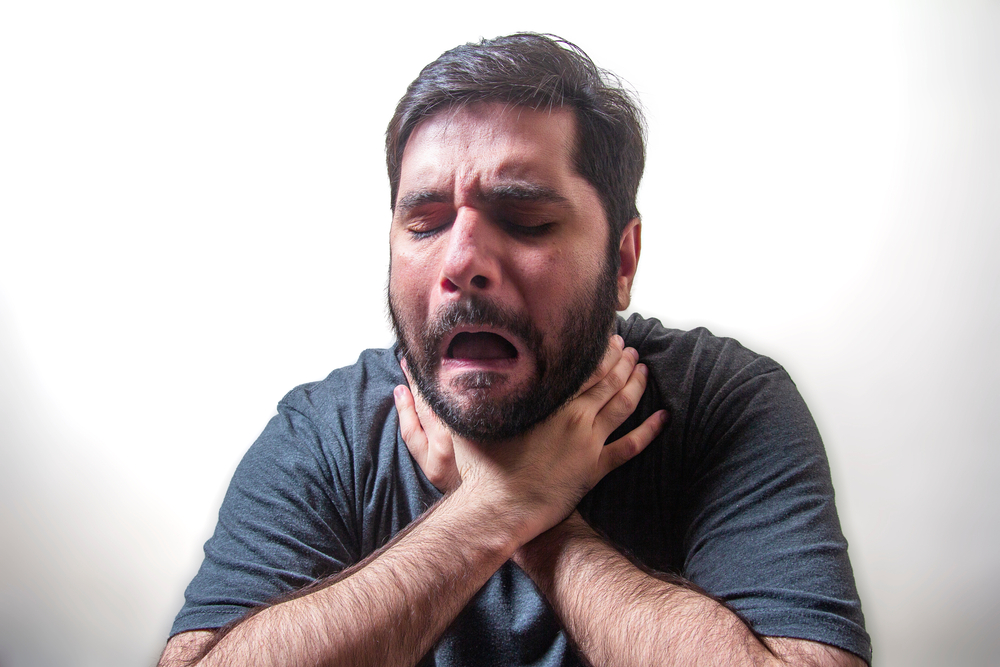
Doctors sometimes turn to unusual remedies – from hot baths and showers to rubbing capsaicin cream on the stomach, or even Haldol, a medication usually reserved for psychotic episodes.
“That’s something that can clinch the diagnosis for me, when someone says they’re better with a hot shower,” Buresh said.
“Patients describe going through all the hot water in their house.”
Who’s at risk?
Even after symptoms subside, CHS can return if cannabis use continues. Stopping cannabis is the only way to fully get rid of the condition.
Carlini warns: “Because the syndrome strikes intermittently, some cannabis users assume a recent episode was unrelated and continue using — only to become severely ill again.”
Long-term recovery often depends on completely quitting cannabis, though addiction makes abstinence a challenge.
Scientists are still unsure why CHS affects some users and not others.
The leading theory suggests overstimulation of the endocannabinoid system disrupts the body’s natural control of nausea and vomiting.
Dr. Buresh adds: “It seems like there’s a threshold when people can become vulnerable to this condition, and that threshold is different for everyone. Even using in small amounts can make these people start throwing up.”
A study from George Washington University surveyed over 1,000 CHS patients, finding that early and prolonged cannabis use is strongly linked to ER visits for scromiting.
Disturbingly, adolescent cases in the US have jumped more than tenfold from 2016 to 2023, with the fastest rises occurring in states where recreational cannabis is still illegal. Interestingly, while overall CHS cases were more common in states where cannabis is legal, younger users saw more cases in states where it remains illegal.
CHS officially recognized
The World Health Organization formally recognized CHS on October 1, 2025, giving it an official diagnosis code. Carlini explained the significance:
“A new code for cannabis hyperemesis syndrome will supply important hard evidence on cannabis-adverse events, which physicians tell us is a growing problem.”
With ER visits climbing, experts warn that cannabis users — both teens and adults — need to be aware of this potentially debilitating condition.